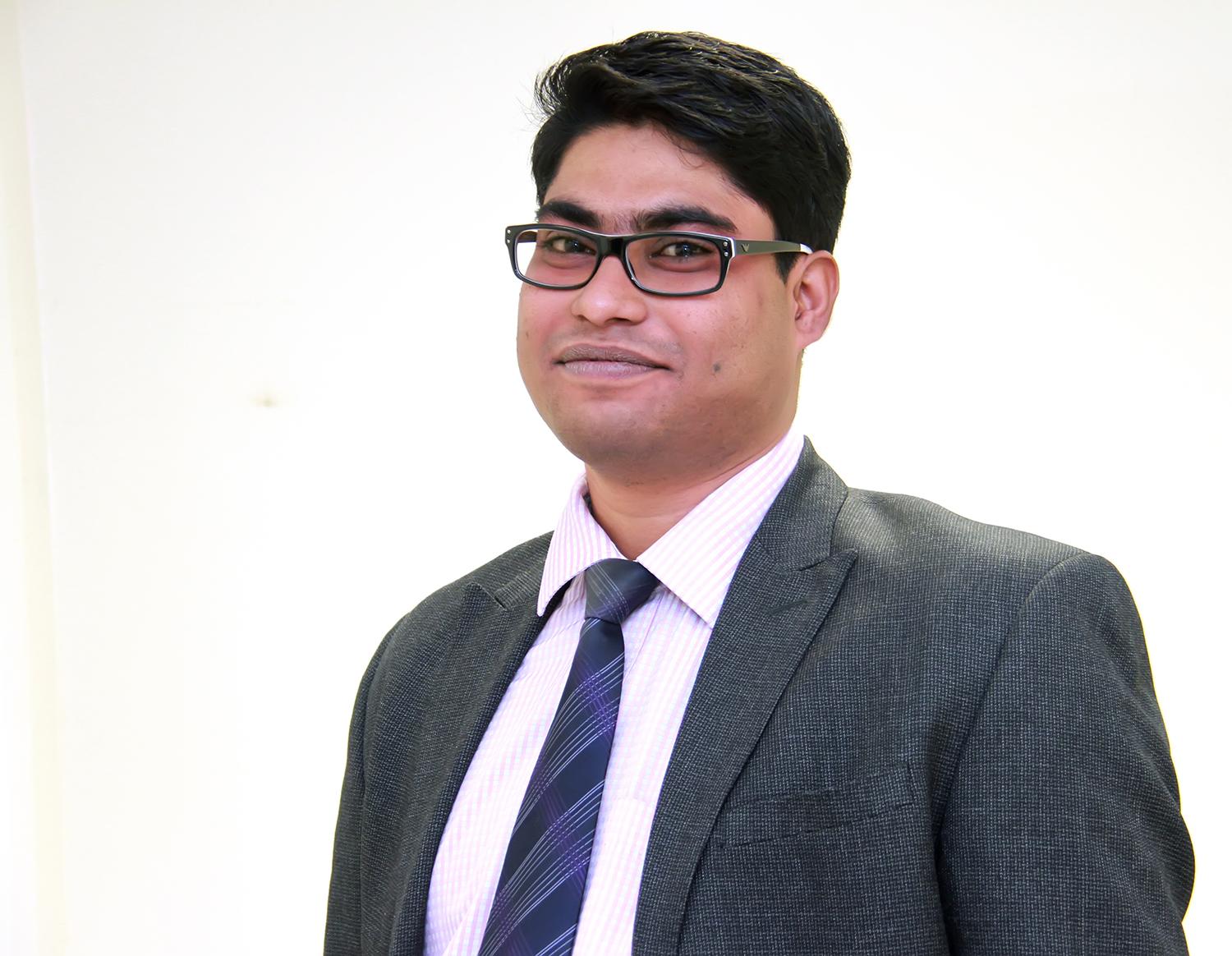
Shahnawaz “Shah” Ahmed
Co-Founder & CTO at Scalpel Ltd | PhD Computer Vision | London, UK
Applying mathematics and computer vision to engineer connected surgical intelligence in healthcare. Published researcher working at the intersection of geometry, AI, and high-stakes systems.
Surgery is one of the most complex and high-stakes environments in modern society. Yet much of it still relies on fragmented systems, manual checks, and invisible processes.
I build the intelligence layer that makes every step in surgery observable and accountable.
My work sits at the intersection of geometry, perception, and systems engineering. During my PhD at Queen Mary University of London, I focused on one of computer vision’s hardest challenges: identifying and matching patterns in low-textured environments.
When there are no obvious edges or clean features, machines struggle. Solving that requires precision, mathematical modelling, and a deep understanding of structure.
Operating theatres are not so different.
Connected Surgical Intelligence
At Scalpel, I lead the engineering and AI teams building Connected Surgical Intelligence — an infrastructure layer where every tray is tracked, every step is validated, and every stakeholder stays in sync.
I architect systems that make surgery measurable, verifiable, and connected.
By combining computer vision, machine learning, and multimodal sensing, we analyse workflows in real time, detect abnormalities, verify protocol compliance, and track surgical instruments automatically. From automated inventory management to retained foreign object detection, our goal is simple: reduce preventable error through structured intelligence.
Building AI for healthcare is not about novelty. It is about trust.
In high-stakes environments, systems must be precise, reliable, and accountable. My role as CTO is to ensure that what we build is scientifically grounded, operationally robust, and capable of delivering real-world impact.
This site shares the thinking behind that work — from mathematical foundations to surgical infrastructure, and where connected intelligence in healthcare is headed next.
Selected Grants
COVID-19: Continuity Grants
Evaluation for effectiveness and market readiness of an ego-centric computer vision based surgical safety systemInnovate UK·Aug 2020·Scalpel Ltd
Digital Health Technology Catalyst Round 4: Collaborative R&D
Evaluation for effectiveness and market readiness of an ego-centric computer vision based surgical safety systemInnovate UK·Oct 2019·Scalpel Ltd
Digital Health Technology Catalyst Round 3: Feasibility Studies
Feasibility trial to evaluate the use of egocentric augmented reality technology to verify safety checks in surgeryInnovate UK·Apr 2019·Scalpel Ltd
Principal's Postgraduate Research Studentship
Studentship covering tuition fees and providing living expenses for three yearsQueen Mary University of London·Sep 2014·London, UK
Faculty Research Grant
A new human face biometrics based on statistical features extracted from discrete wavelet transform coefficients for authentication and identification systemsAlfaisal University·Dec 2012·Riyadh, KSA
Faculty Research Grant
Prototype of risk prediction and early detection of multi-cancerAlfaisal University·Dec 2012·Riyadh, KSA
Selected Publications
IEEE Transactions on Image Processing·Apr 2018
Mathematics Magazine, MAA·Jan 2018
Mathematical Problems in Engineering·Sep 2014
Society for Industrial and Applied Mathematics·Sep 2011